Industrial Water Treatment Plant, Reverse Osmosis, Water Softener and Demineralisation Solutions
Project-based Industrial Water Treatment Plant packages for commercial, industrial and institutional facilities — raw-water assessment, Multi-Grade Filtration, Activated Carbon Filtration, Water Softener Plant, Reverse Osmosis Plant and Demineralisation Plant systems, installed, tested and commissioned by an in-house project team.
- Raw-water assessment and treatment-scheme selection
- Multi-Grade Filtration, Activated Carbon Filtration and Water Softening
- Reverse Osmosis Plant and Demineralisation Plant packages
- Installation, testing, commissioning and long-term operation support
An Industrial Water Treatment Plant is designed around two facts: the character of the raw water entering the facility and the water quality the process or utility actually needs. A borewell supply feeding a boiler, a municipal supply feeding a cooling tower and a recycled supply feeding a process line each demand a different treatment train — even at the same flow rate.
Decon Infratech executes project-based water treatment packages combining Multi-Grade Filtration, Activated Carbon Filtration, Water Softener Plant units, Reverse Osmosis Plant skids and Demineralisation Plant units, along with chemical dosing, pumps, vessels, valves, instrumentation, skid and piping integration, installation, testing and commissioning. We also rectify and upgrade existing plants that are underperforming.
This page covers project-based commercial and industrial requirements only. Decon Infratech does not deal in domestic household water purifiers. For plant-level treatment solutions across sewage, water and effluent, see our Sewage Treatment Plant, Water Treatment Plant and Effluent Treatment Plant solutions.
Industrial Water Treatment Plant Scope — Stage by Stage
A complete treatment train, selected and sized against the raw-water report and the required end-use quality.
Raw-Water Assessment
Every industrial water treatment scheme starts from the raw-water source and the end-use requirement, not from a standard product list.
- Review of raw-water analysis reports supplied by the client or an accredited laboratory
- Source study — borewell, municipal supply, surface water or recycled water
- Assessment of turbidity, hardness, iron, chlorides, total dissolved solids and organics
- End-use requirement mapping for process, utility, boiler feed or cooling-tower makeup
- Selection of the treatment train and indicative capacity in kilolitres per day
Multi-Grade Filtration
Multi-Grade Filtration removes suspended solids and turbidity so that downstream stages are protected from fouling.
- Pressure-vessel based Multi-Grade Filter units in mild steel or fibre-reinforced plastic
- Graded silica sand, pebble and gravel media loading
- Frontal piping, multiport or manual valve arrangements
- Backwash and rinse provisions with drain routing
- Differential-pressure monitoring across the filter bed
Activated Carbon Filtration
Activated Carbon Filtration targets residual chlorine, colour, odour and dissolved organics ahead of membrane and ion-exchange stages.
- Activated Carbon Filter vessels with granular activated carbon media
- Media selection based on the organic and chlorine load in the feed water
- Backwash arrangements and media-replacement access
- Protection of Reverse Osmosis membranes from oxidising chlorine
- Sampling points before and after the carbon bed
Water Softening
A Water Softener Plant exchanges hardness-forming calcium and magnesium ions, reducing scaling in pipework, heat exchangers and boilers.
- Water Softener Plant vessels with strong acid cation resin
- Manual, semi-automatic or automatic regeneration arrangements
- Brine tank, brine measuring and salt-dosing provisions
- Service-flow and regeneration piping with valve arrangement
- Duplex arrangements where uninterrupted soft-water supply is required
Reverse Osmosis Treatment
A Reverse Osmosis Plant reduces dissolved salts using semi-permeable membranes under pressure. Reverse Osmosis is abbreviated as RO in the industry.
- Reverse Osmosis Plant skids with membrane pressure vessels and membranes
- Micron cartridge filtration ahead of the high-pressure pump
- High-pressure pumping with pressure and flow instrumentation
- Antiscalant dosing and clean-in-place provisions
- Permeate, reject and recirculation piping with sampling points
Demineralisation
A Demineralisation Plant uses ion-exchange resin to reduce dissolved ionic content where very low conductivity is required. Demineralisation is abbreviated as DM.
- Demineralisation Plant units with cation and anion exchange vessels
- Degasser and mixed-bed polishing units where the scheme requires them
- Acid and alkali regeneration systems with safe handling arrangements
- Conductivity monitoring at the treated-water outlet
- Neutralisation pit coordination for regeneration effluent
Chemical Dosing
Dosing systems condition the water chemistry through the treatment train and protect equipment from scaling, fouling and corrosion.
- Antiscalant, coagulant, pH-correction and disinfection dosing systems
- Dosing pumps with calibration columns and dosing tanks
- Chemical storage arrangement with bunding coordination
- Injection points, non-return arrangements and dosing lines
- Operating dose recommendations handed over with the plant documentation
Pumps, Vessels, Valves and Instrumentation
The mechanical package decides how the plant actually runs day to day.
- Feed pumps, transfer pumps, high-pressure pumps and dosing pumps
- Pressure vessels in mild steel, fibre-reinforced plastic or stainless steel
- Butterfly, ball, non-return, multiport and diaphragm valves
- Pressure gauges, flow meters, level switches and conductivity meters
- Control panels with starters, sequencing and interlock provisions
Not every project needs every stage. The treatment train is shortened or extended based on the raw-water analysis, the end-use requirement and the client's technical specification.
Skid, Piping and Site Integration
Equipment selection is only half of a water treatment package. How the units are laid out, interconnected and integrated with the building's utilities decides whether the plant is easy to operate and maintain.
Skid and Layout Integration
Treatment units are arranged on skids or on prepared foundations to suit the available plant-room footprint, with clearances kept for media loading, membrane replacement and valve operation.
Piping and Interconnection
Interconnecting piping between filtration, softening, Reverse Osmosis and Demineralisation stages is fabricated and routed with supports, unions and sampling points so that individual units can be isolated for maintenance.
Pumping and Hydraulics
Feed, transfer and high-pressure pumps are selected against the required flow and the pressure losses across each treatment stage, including filter beds and membranes.
Electrical and Control Readiness
Control panels, cabling routes, earthing provisions and interlocks between pumps, level switches and dosing systems are coordinated with the project's electrical package.
Utility and Drain Coordination
Backwash, regeneration and reject lines are routed to the drainage or neutralisation arrangement agreed with the project's consultants and the site's discharge provisions.
Space, Access and Handling
Vessel handling routes, door widths, headroom and lifting arrangements are checked before installation so that equipment can be brought in and later serviced without dismantling the plant room.
Installation, Testing and Commissioning
Site execution is handled by Decon Infratech's own supervision and technician teams, from equipment placement through to stabilised operation and handover.
Water Treatment Plant Execution Photographs
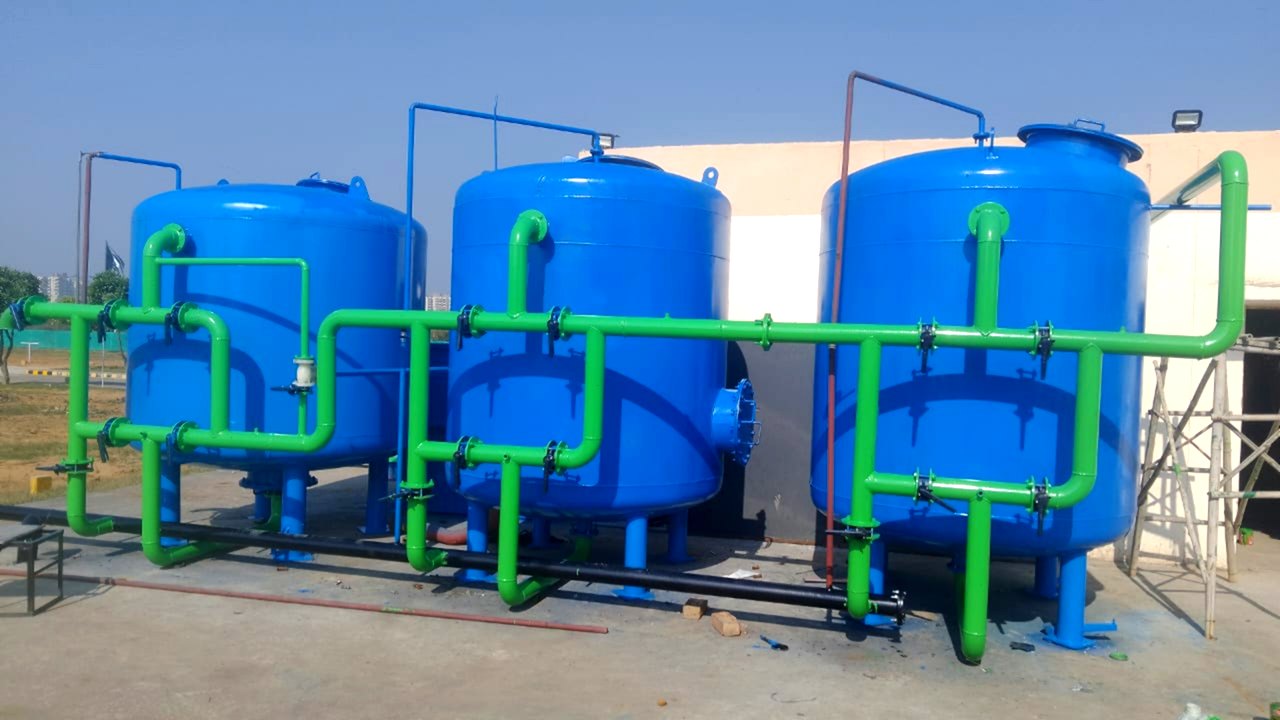
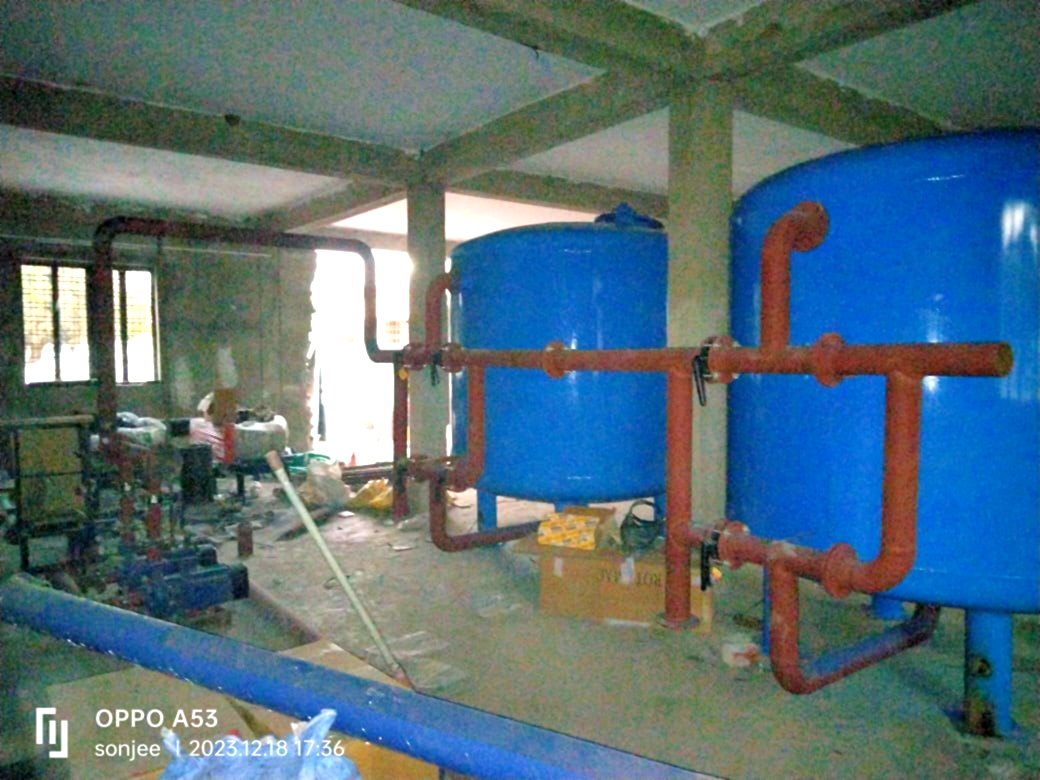
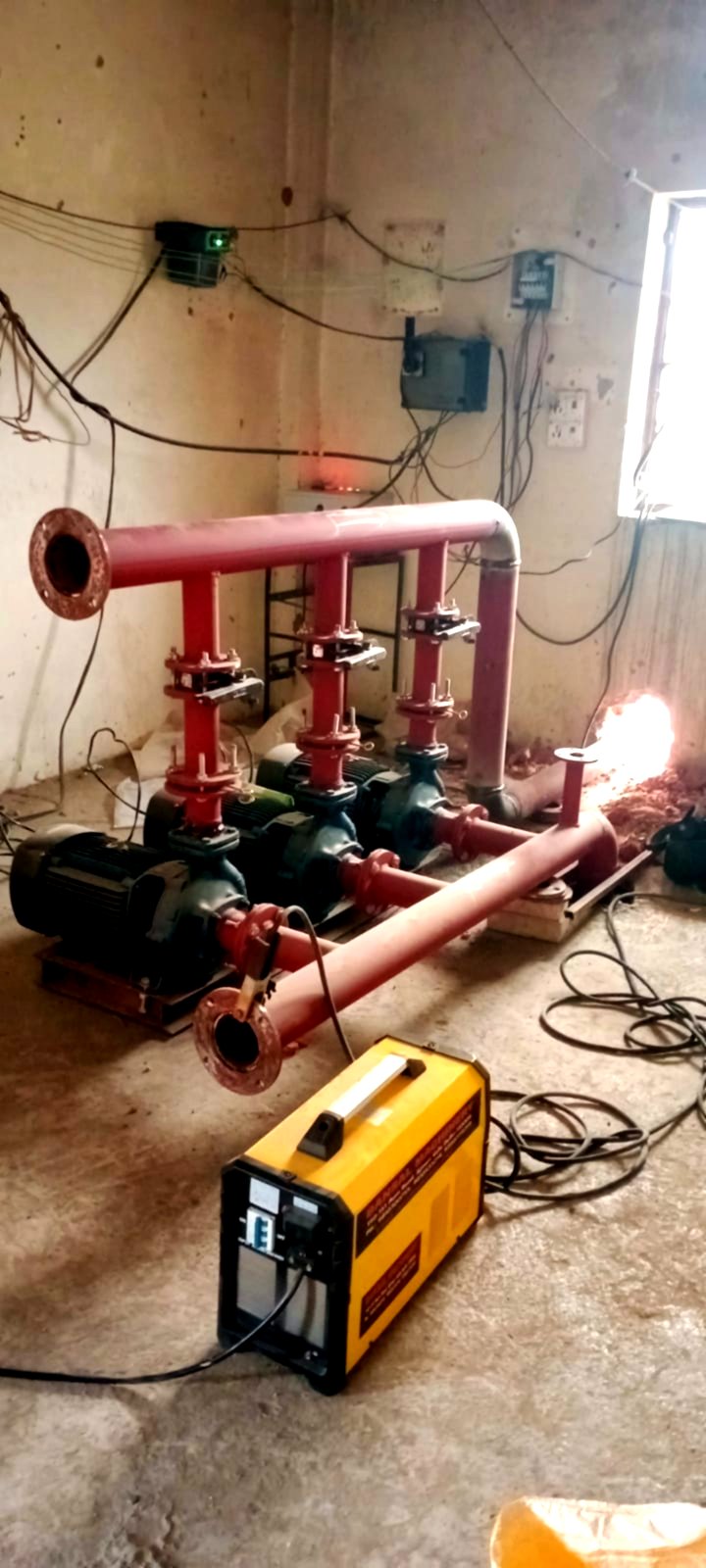
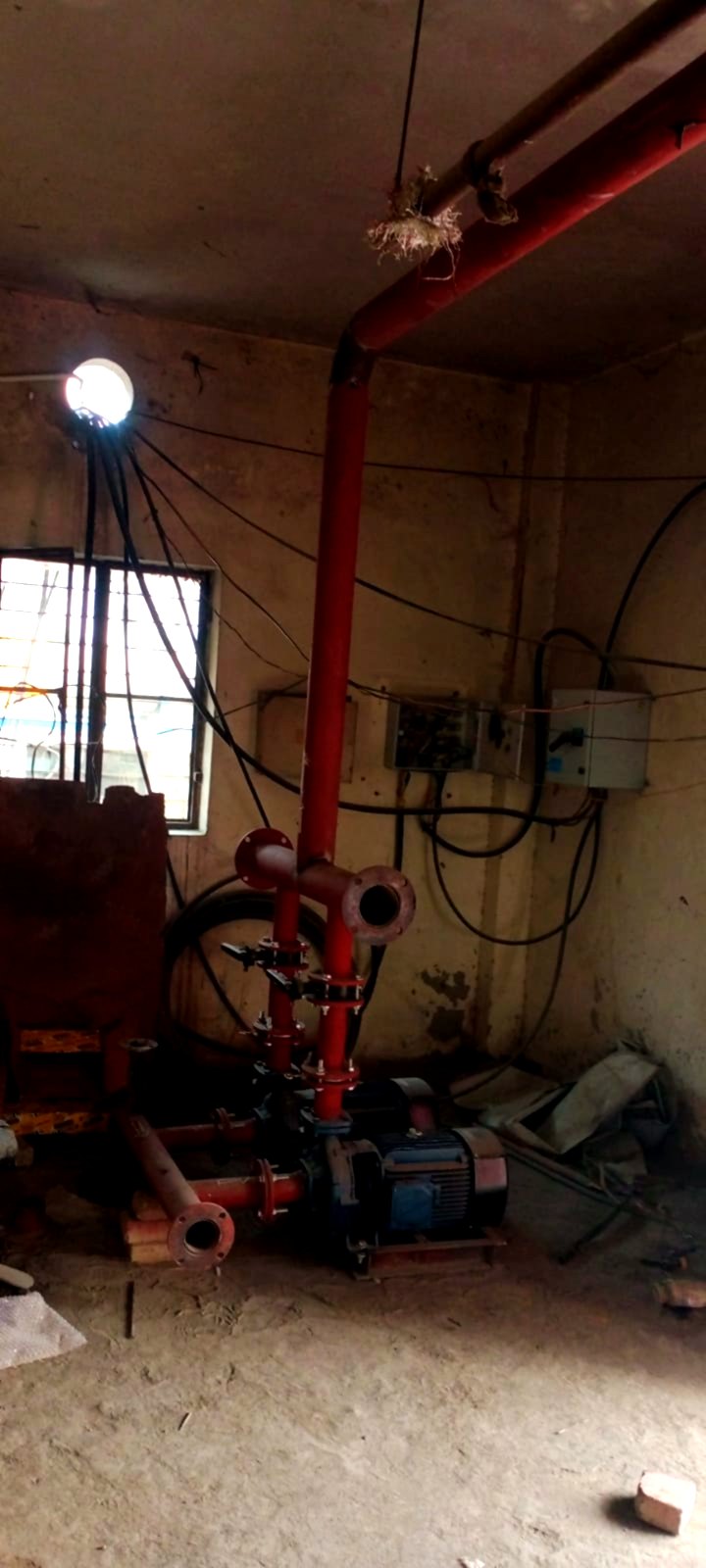
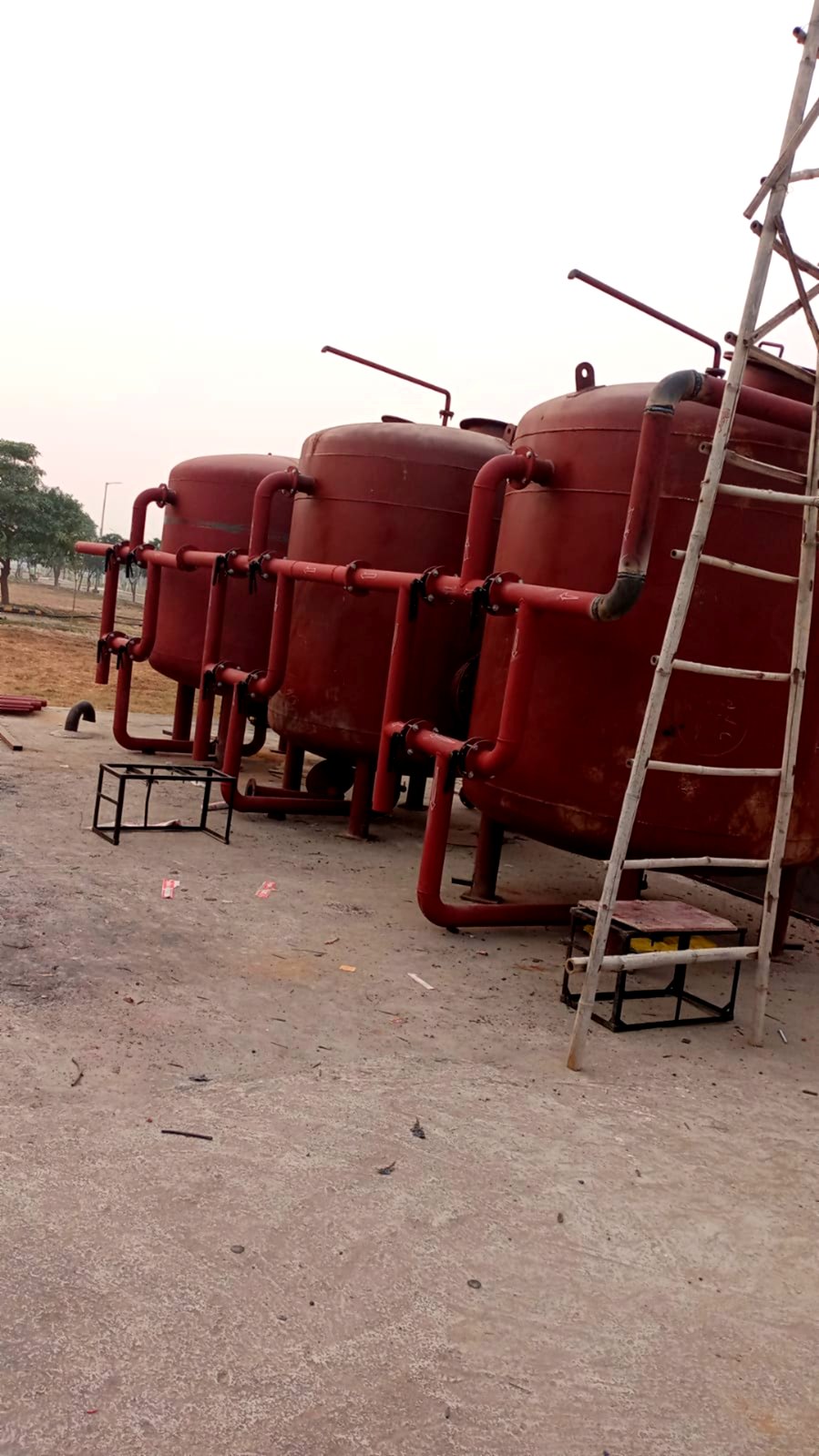
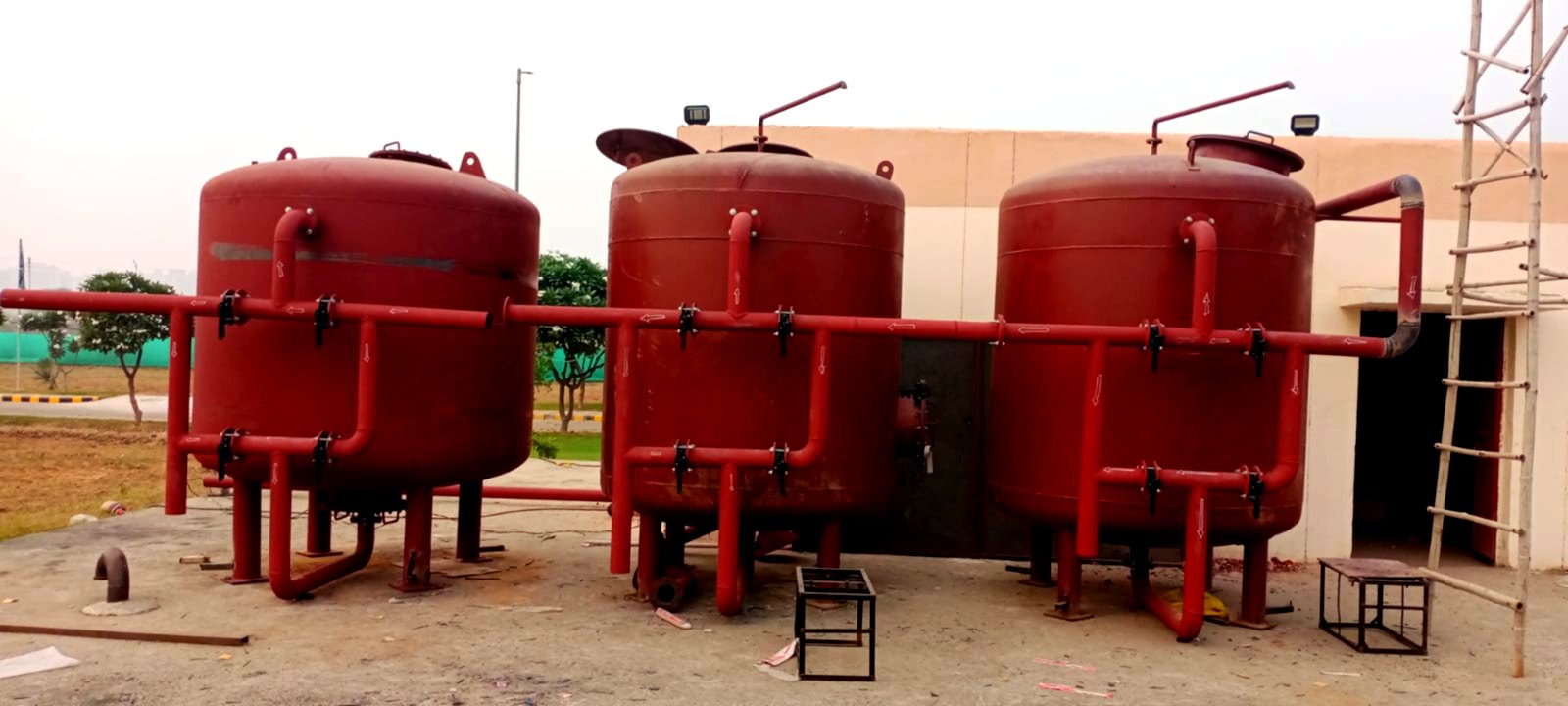
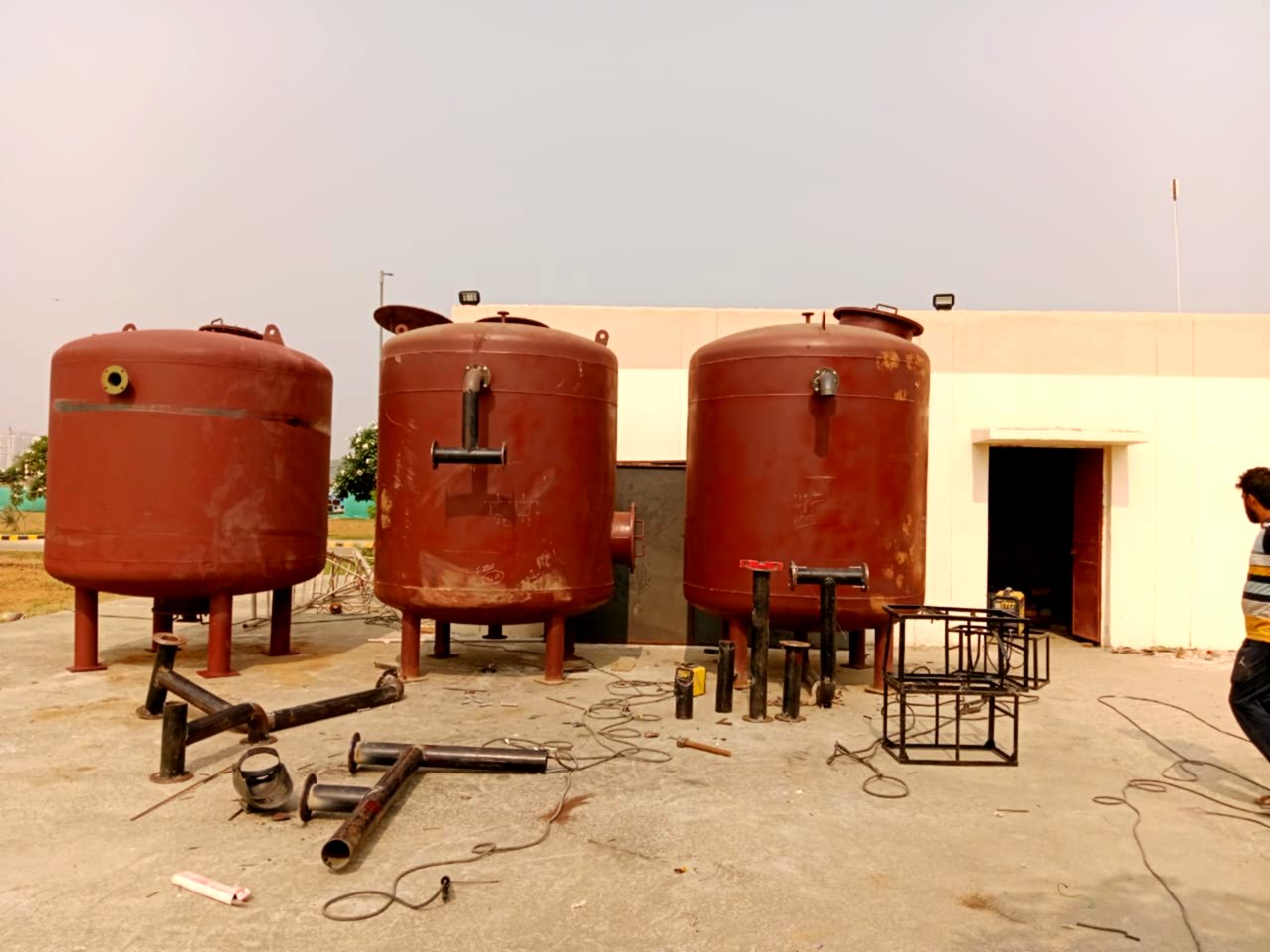
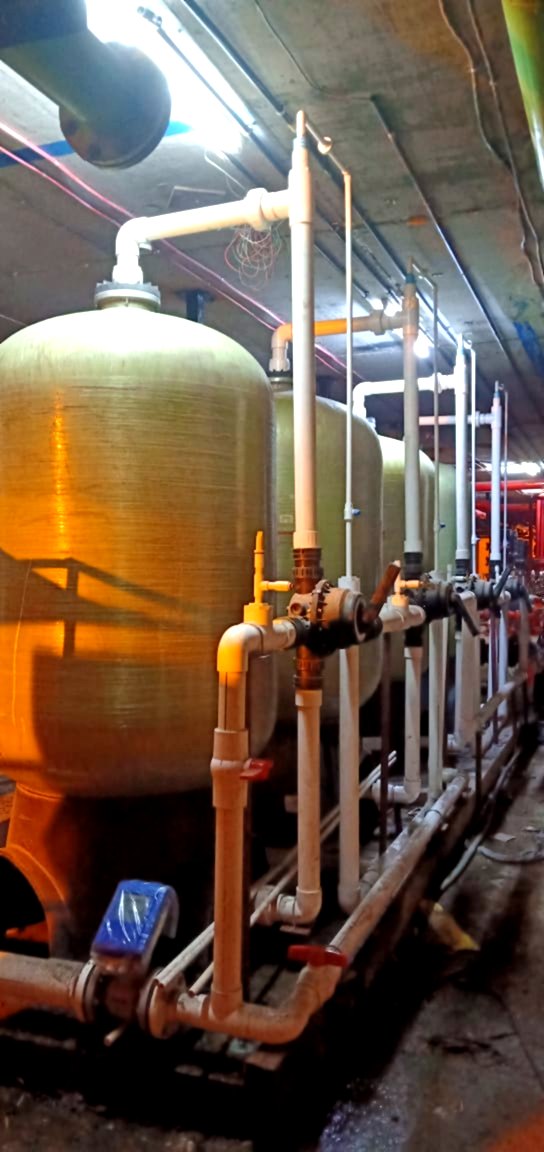
Photographs from Decon Infratech water treatment plant installations — filtration vessels, pump manifolds, risers and interconnecting piping executed on live client sites.
More executed work is documented on the Decon Infratech projects page.
Rectification and Upgradation of Existing Plants
Many industrial plants do not need replacement — they need exhausted media, tired membranes, failed instrumentation or badly executed piping put right, and sometimes an additional treatment stage.
Rectification scope is finalised only after a site inspection and a review of the existing plant's operating history. For ongoing operation of running plants, see sewage treatment plant and water treatment plant operation and maintenance.
How We Deliver an Industrial Water Treatment Plant
- 1
Requirement Discussion
Application, required flow, operating hours and end-use quality expectation are recorded.
- 2
Raw-Water Report Review
Available raw-water analysis is reviewed; fresh testing is advised where reports are missing or dated.
- 3
Treatment Scheme Proposal
Stage-wise treatment train, capacity and equipment schedule are proposed with commercials.
- 4
Layout and Utility Coordination
Plant-room layout, foundations, drain routing and electrical requirements are frozen.
- 5
Supply and Fabrication
Vessels, pumps, valves, instrumentation and skid assemblies are arranged and fabricated.
- 6
Installation and Piping
Equipment installation, interconnecting piping, dosing systems and panel integration.
- 7
Testing and Commissioning
Hydro-testing, media and membrane loading, dry run, wet run and stage-wise commissioning.
- 8
Handover and Operation Support
Operator orientation, documentation handover and optional operation and maintenance support.
Facilities We Work With
Project-based water treatment for commercial, industrial and institutional facilities across India. Domestic household purifiers are not part of our scope.
Frequently Asked Questions
What is the difference between a Water Softener Plant, a Reverse Osmosis Plant and a Demineralisation Plant?
A Water Softener Plant removes hardness-forming calcium and magnesium ions by ion exchange. A Reverse Osmosis Plant reduces dissolved salts by pushing water through semi-permeable membranes under pressure. A Demineralisation Plant uses cation and anion exchange resin to reduce dissolved ionic content where very low conductivity is required. The right choice depends on the raw-water analysis and the end-use requirement.
Do you handle project-based industrial requirements or domestic water purifiers?
Decon Infratech works only on project-based commercial, industrial, institutional and infrastructure water treatment requirements. We do not supply or service domestic household water purifiers.
What information is needed to propose an Industrial Water Treatment Plant?
A raw-water analysis report, the required treated-water flow in kilolitres per day, the intended end use, daily operating hours and the available plant-room space. Where a raw-water report is not available, we advise testing through an accredited laboratory before finalising the treatment scheme.
Can you rectify or upgrade an existing water treatment plant supplied by another agency?
Yes. We carry out condition assessment, media and resin replacement, membrane replacement, pump and instrumentation replacement, re-piping and capacity augmentation on existing plants after a site inspection.
Do you provide operation and maintenance after commissioning?
Yes. Operation and maintenance support for treatment plants is available and is covered on our sewage treatment plant and water treatment plant operation and maintenance page.
What treated-water quality can be guaranteed?
Treated-water quality depends on the raw-water characteristics, the selected treatment scheme and plant operation. Output expectations are defined project by project in the technical offer against the client's raw-water report and end-use requirement, not stated as a fixed figure in advance.
Related Services and Work
Sewage Treatment Plant, Water Treatment Plant and Effluent Treatment Plant Solutions
Plant-level treatment solutions, supply, installation and turnkey execution.
Sewage Treatment Plant and Water Treatment Plant Operation and Maintenance
Operation, preventive maintenance, rectification and upgradation of running plants.
Decon Infratech Projects
Executed project case studies across fire, plumbing and treatment plant works.
Planning an Industrial Water Treatment Plant?
Share your raw-water details and required capacity. A Decon engineer will respond within one working day.